Education

Learn Before You Leap

We believe in education over persuasion. Explore the science and stories behind each modality — at your own pace, with no pressure.

Red light therapy session at Thrive Living
Modality Guide

What is Red Light Therapy?

Red light therapy, also known as photobiomodulation, uses specific wavelengths of red and near-infrared light to support your body at the cellular level. It's non-invasive, painless, and deeply relaxing.

How Does It Work?

Your cells contain mitochondria — the powerhouses responsible for producing ATP, your body's cellular energy currency. When mitochondria absorb specific wavelengths of red light (typically 630–670nm) and near-infrared light (810–850nm), they produce more ATP, reduce oxidative stress, and initiate cellular repair processes.

This interaction also supports collagen production, reduces inflammation, and helps cells recover from the cumulative toll of chronic stress. Think of it as giving your cells a non-invasive energy recharge — so they can do their jobs at full capacity instead of running on empty.

What Might You Experience?

During a red light session, you'll simply relax while the light works. Many people feel warmth, a subtle sense of ease, and a gentle "lit up" quality. Over sessions, people often report improved mood, better sleep, reduced muscle tension, and a more consistent sense of energy throughout the day.

In the Wellness Circuit

Red light therapy is the second stop in your Wellness Circuit journey. After PEMF has supported electromagnetic balance and cellular voltage, red light goes deeper at the cellular energy level — building a compounding effect of calm and recovery.

Research & References

  • Hamblin, M.R. (2017). "Mechanisms and applications of the anti-inflammatory effects of photobiomodulation." AIMS Biophysics, 4(3), 337–361.
  • Ferraresi, C., Huang, Y.Y., & Hamblin, M.R. (2016). "Photobiomodulation in human muscle tissue: an advantage in sports performance?" Journal of Biophotonics, 9(11–12), 1273–1299.
  • Avci, P. et al. (2013). "Low-level laser (light) therapy (LLLT) in skin: stimulating, healing, restoring." Seminars in Cutaneous Medicine and Surgery, 32(1), 41–52.

Modality Guide

Understanding PEMF

PEMF stands for Pulsed Electromagnetic Field therapy. It uses gentle, low-frequency electromagnetic pulses to interact with your body's own electrical and magnetic processes — influencing everything from cellular repair to nervous system regulation.

The Science

Every cell in your body carries an electrical charge. When cells are chronically stressed or depleted, that charge weakens — and so does your capacity to think clearly, sleep deeply, and recover effectively. PEMF delivers electromagnetic pulses at frequencies that the body recognizes and responds to, helping restore optimal cellular voltage, improving circulation, and supporting natural repair processes.

PEMF has been used in clinical and research settings for decades, including applications in bone healing, pain management, and neurological support. As a wellness tool, it helps the body build a more resilient baseline — reducing the physiological toll of chronic stress over time.

What Does It Feel Like?

Sessions are experienced on a comfortable mat or device. Most people describe PEMF as deeply relaxing — you may feel a gentle pulsing sensation, or very little at all. The effects are often noticed afterward: reduced tension, better sleep, and a sense of being genuinely "recharged."

In the Wellness Circuit

PEMF is the first modality in the circuit. It sets the foundation by working at the electromagnetic level to support circulation, cellular repair, and a calmer nervous system baseline — preparing your body for the deeper restoration that follows.

Research & References

  • Markov, M.S. (2007). "Pulsed electromagnetic field therapy history, state of the art and future." The Environmentalist, 27(4), 465–475.
  • Strauch, B. et al. (2009). "Evidence-based use of pulsed electromagnetic field therapy in clinical plastic surgery." Aesthetic Surgery Journal, 29(2), 135–143.
  • Ross, C.L. & Harrison, B.S. (2013). "The use of magnetic field for the reduction of inflammation: a review of the history and therapeutic results." Alternative Therapies in Health and Medicine, 19(2), 47–54.
PEMF therapy wellness session at Thrive Living
BAUD acoustic therapy session with headphones
Modality Guide

How BAUD Works

The BAUD (Bio-Acoustical Utilization Device) uses targeted sound frequencies to help release emotional tension and stored stress. It works with your brain's natural neuroplasticity — its ability to reorganize and form new neural connections.

The Approach

Certain emotional experiences create neural patterns that get "stuck" — like a song on repeat. The BAUD delivers specific frequencies that help disrupt these stuck patterns, allowing your brain to process and release the associated emotional charge.

It's not about erasing memories. The memory itself remains, but the emotional weight that comes with it can lift. Clients have described it as a charged event becoming "just a fact" — neutral instead of triggering.

What to Expect

During a BAUD session, you'll listen to specific tones through headphones while focusing on the feeling or memory you'd like to address. Many people notice a shift in how they feel about the issue — sometimes during the session, sometimes in the hours or days that follow.

In the Wellness Circuit

BAUD is the third modality. By this point, your body is deeply relaxed from red light and PEMF. The BAUD works at the emotional and mental level — releasing the stuck patterns that contribute to burnout, frustration, and emotional exhaustion.

Modality Guide

HeartMath & Coherence

HeartMath is a scientifically validated approach to emotional regulation based on heart-brain coherence. Using a sensor clip that attaches to your ear and connects to a computer, HeartMath measures your heart rhythm patterns in real time — giving you visible biofeedback as you learn to shift into a coherent state.

Heart-Brain Connection

Your heart sends more signals to your brain than your brain sends to your heart. When your heart rhythm pattern is smooth and ordered (coherent), it creates a cascade of positive effects — improved cognitive function, emotional stability, and physical resilience.

During a session, the ear clip sensor tracks your heart rate variability (HRV) and displays your coherence level on screen — so you can see your nervous system shifting in real time as you practice the techniques.

Practical Tools

Through guided breathing and focus techniques — paired with real-time biofeedback on the computer screen — you learn to activate coherence on demand. Over time, these become tools you carry with you: skills you can use in a meeting, during a difficult conversation, before sleep, or any time you feel overwhelmed.

In the Wellness Circuit

HeartMath coaching closes the Wellness Circuit. After your body and emotions have been supported by the first three modalities, HeartMath gives you the practical skills to maintain that feeling of balance in your daily life.

Research & References

  • McCraty, R. & Zayas, M.A. (2014). "Cardiac coherence, self-regulation, autonomic stability, and psychosocial well-being." Frontiers in Psychology, 5, 1090.
  • McCraty, R. et al. (2009). "New hope for correctional officers: an innovative program for reducing stress and health risks." Applied Psychophysiology and Biofeedback, 34(4), 251–272.
  • HeartMath Institute. "Science of the Heart: Exploring the Role of the Heart in Human Performance." HeartMath Research Library.
Woman seated at a laptop during a HeartMath coaching session
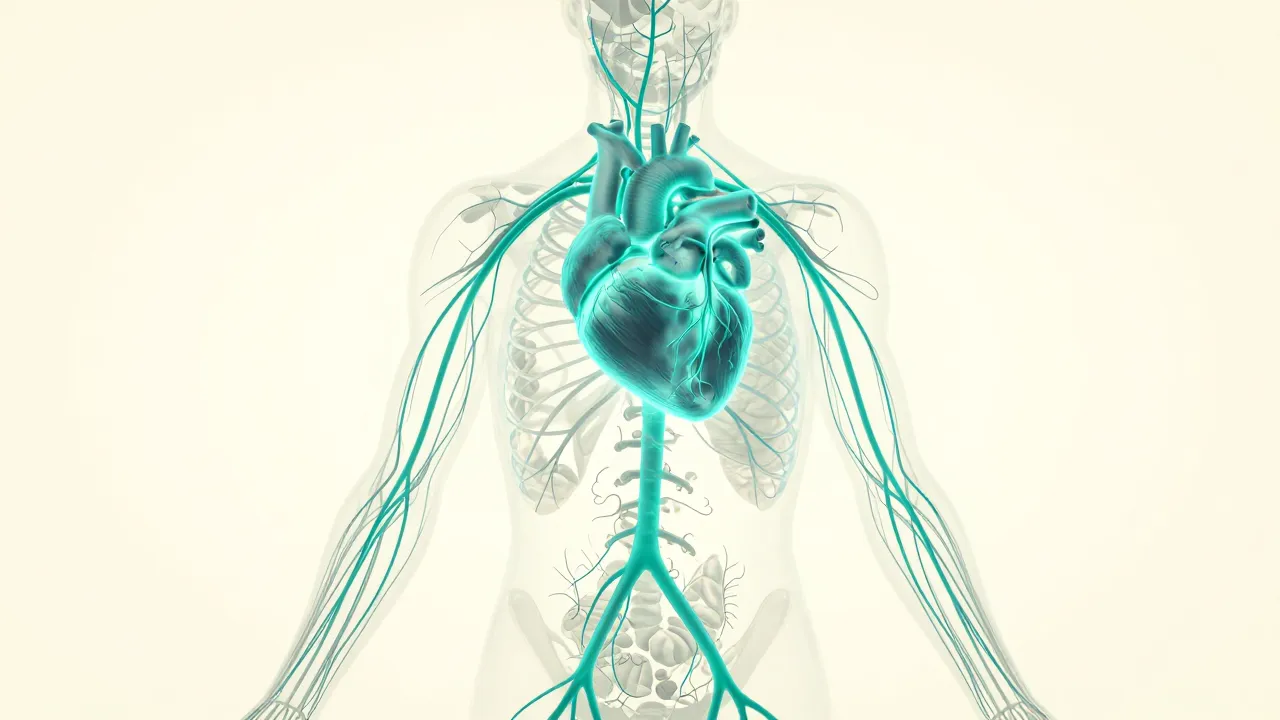
Nervous system visualization — vagus nerve and heart-brain connection
Foundation

Why the Nervous System Is the Starting Point

Before any wellness tool can do its best work, the nervous system has to feel safe. That's not a metaphor — it's physiology. And it's the principle behind everything Thrive Living does.

Fight-or-Flight vs. Regulated Calm

Your autonomic nervous system constantly scans the environment and body for signals of safety or threat. When it detects danger — real or perceived — it activates the sympathetic "fight-or-flight" response: heart rate increases, muscles tighten, digestion pauses, and higher cognitive functions go offline. This is exactly what you need in a genuine emergency. It's exactly what you don't need as a chronic baseline.

Chronic workplace stress, long hours, and relentless demands keep many people's nervous systems stuck in sympathetic overdrive — anxious, wired, reactive. Others tip into collapse: numb, checked out, exhausted. Neither state supports real performance, creativity, or connection.

Polyvagal Theory: Cues of Safety

Polyvagal Theory, developed by Dr. Stephen Porges, describes how the nervous system moves between states and what it needs to shift toward regulation. One of its core insights is that the body responds to "neuroception" — the subconscious detection of safety cues in the environment, in other people, and in the body itself.

When safety cues are present, the nervous system can downshift into what's called the ventral vagal state: calm, engaged, socially connected, and capable of the kind of clear thinking and collaboration that high-performing work requires.

Why the Circuit Works

The Wellness Circuit is designed to deliver cues of safety to the nervous system through multiple channels simultaneously. Red light therapy supports the cells that power everything. PEMF works at the electromagnetic level to restore cellular balance. BAUD helps release the stored emotional charge of stuck stress patterns. HeartMath teaches the nervous system to access regulated states on demand.

Together, these modalities don't just reduce stress — they help shift the nervous system's set point toward calm. That's what makes the effects feel different from a massage or a mindfulness app. It's not layered on top of the stress. It works underneath it.

Individual Service

What Is Frequency Specific Microcurrent?

Frequency Specific Microcurrent (FSM) is a therapeutic modality that uses very low-level electrical currents — at the micro-amperage level — combined with specific frequency pairs targeted to particular tissues or conditions in the body.

How It Works

FSM currents operate at amplitudes similar in scale to the body's own bioelectric signals — typically below the threshold of sensation. People often feel little or nothing during a session, though some notice a gentle warmth or subtle tingling.

Different frequency combinations are selected based on what's being addressed. Frequencies are thought to interact with specific tissues and conditions by resonating with the body's own electrical environment — reducing inflammation, softening scar tissue, calming nerve sensitization, and supporting tissue repair processes.

What It's Used For

FSM has applications in pain reduction, nerve and tissue repair, inflammatory conditions, stress-related muscle tension, and nervous system support. It can be particularly effective for people dealing with chronic stress patterns that have settled into the body — tight muscles, persistent fatigue, lingering discomfort that has no clear structural cause.

FSM at Thrive Living

Brandy Kiser is a trained FSM provider. In-person FSM sessions are conducted in a clinical setting alongside Dr. Carrick, and Thrive Living starts that process with a Discovery Call to confirm fit, goals, and next steps before scheduling a longer session.

Now accepting FSM clients through a Discovery Call.

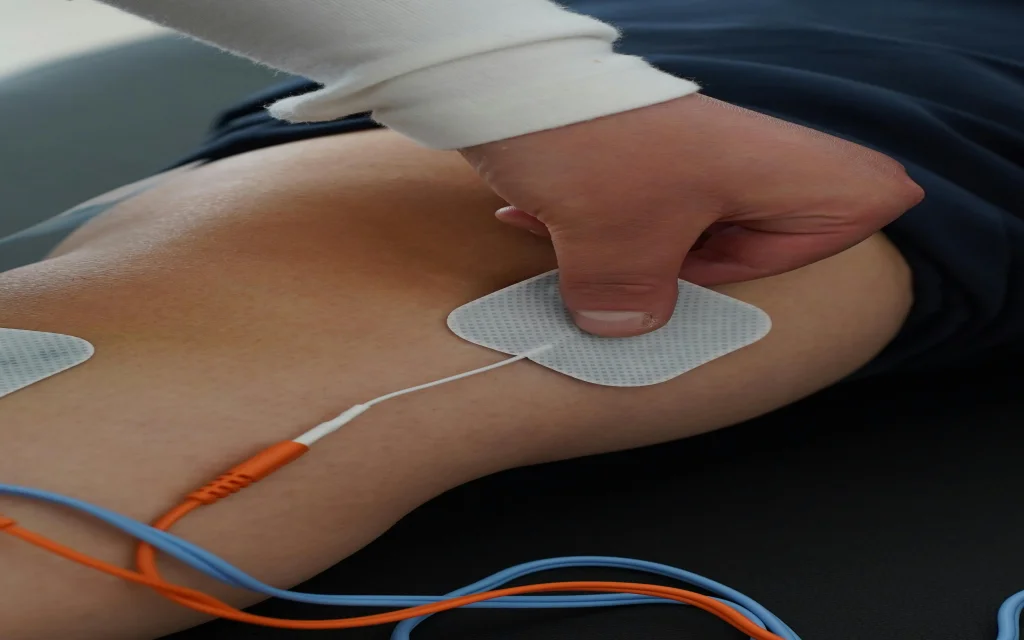
Frequency specific microcurrent therapy electrode pads

Ready to Experience It?

Reading about wellness is a great start. Experiencing it is where the real shift happens.